Scroll, Compare, Freeze: How Watching Other Creators Is Quietly Killing Your Own Work
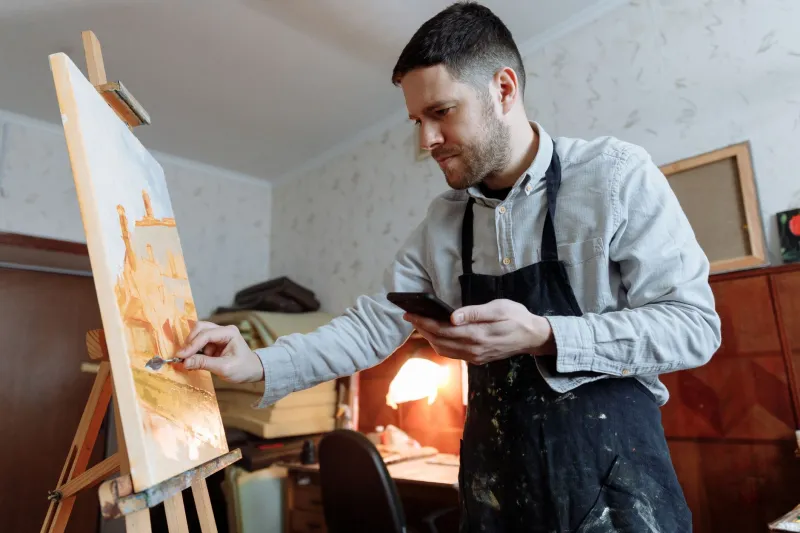
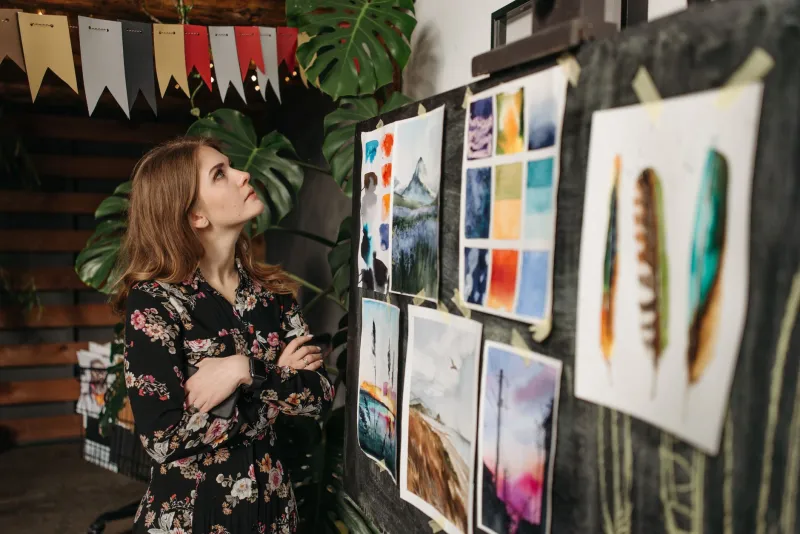
You sit down to make something. Maybe it's a song, a painting, a short film, a poem — whatever your thing is. Before you start, you figure you'll just do a quick scroll. Get a little inspired. See what's out there. Twenty minutes later, you close the app and the blank page in front of you feels about ten times more terrifying than it did before.
Welcome to the comparison trap. It's not a character flaw. It's not laziness. It's a psychological loop that millions of creators in the US and beyond are caught in right now, and it's doing serious damage to some genuinely talented people.
Why Your Brain Loves to Compare (Even When It Hurts You)
Here's the uncomfortable truth: comparison is something your brain is literally wired to do. Social comparison theory — a concept introduced by psychologist Leon Festinger back in the 1950s — explains that humans naturally evaluate themselves against others to understand where they stand. Back then, your reference group was maybe your neighborhood, your school, your local scene. Manageable. Finite.
Now? Your reference group is every artist on the entire internet, updated in real time, filtered through algorithms designed to surface the most polished, most viral, most impressive work possible. You're not comparing yourself to your peers anymore. You're comparing your Tuesday afternoon rough draft to someone else's most curated, most celebrated moment.
That's not a fair fight. And your nervous system knows it.
The result is what researchers sometimes call "creative paralysis" — a state where the gap between where you are and where you think you should be feels so overwhelming that starting anything at all seems pointless. You don't just feel behind. You feel like you fundamentally misunderstood your own abilities.
The Inspiration Illusion
The cruel part is that most of us aren't scrolling with bad intentions. We go looking for inspiration. And sometimes — genuinely — we find it. You see a color palette that sparks something. You hear a chord progression that opens a door. That's real, and it matters.
But there's a tipping point, and most of us blow past it without noticing.
When inspiration tips into consumption, something shifts. Instead of gathering fuel, you're burning it. Instead of feeding your creative instincts, you're slowly teaching yourself to distrust them. Every beautiful thing you see becomes evidence that your own work isn't beautiful enough. Every successful creator becomes a mirror that reflects back everything you haven't done yet.
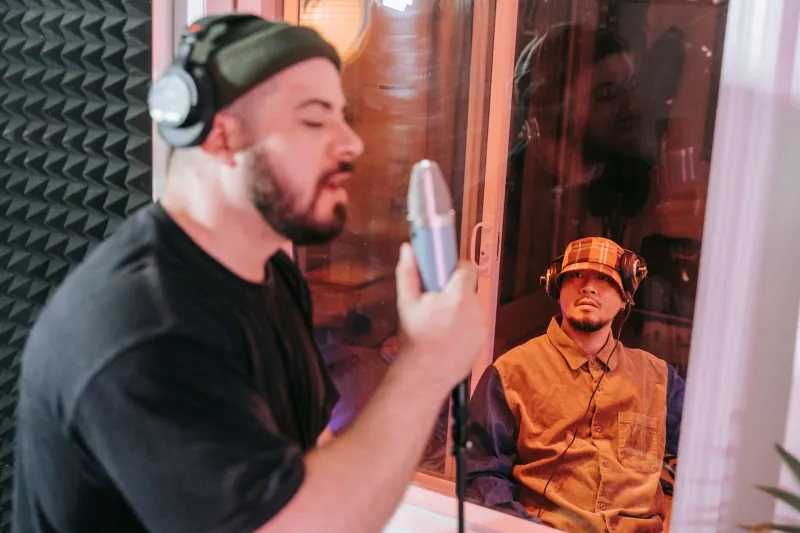
Singer-songwriter Maggie Rogers has talked openly about stepping back from social media during her creative process, noting that the noise made it harder to hear her own voice. She's not alone. Across disciplines — visual art, music, writing, filmmaking — creators who've made real breakthroughs often describe a period of deliberate disconnection. Not forever. Just long enough to remember what they actually sound like without everyone else's work in the room.
What "Stepping Back" Actually Looks Like
Let's be real: telling someone to "just get off social media" is about as useful as telling someone with insomnia to "just sleep." These platforms are designed to pull you back in. Your livelihood might literally depend on showing up there. And staying culturally aware — knowing what's moving people, what conversations are happening — is a legitimate part of being a working creative.
So the goal isn't disappearance. It's boundary-setting with intention.
A few things that actually work:
Time-box your consumption. Give yourself a specific window — say, 20 minutes in the morning — where you look at other people's work. When the window closes, it closes. You don't dip back in between creative sessions. This sounds simple and it is, but it's surprisingly hard to stick to until it becomes habit.
Separate your feeds. A lot of creators keep two accounts: one for their professional presence, one that's purely personal and follows only people whose work genuinely delights them without triggering comparison. The professional feed is for business. The personal feed is for joy. Keeping them separate protects both.
Create before you consume. Make it a rule — no scrolling before you've done at least some creative work that day. Even 15 minutes. Even something small. This flips the script so your own voice is the first thing in the room, not everyone else's.
Audit your follows regularly. Not everyone you followed two years ago still serves you. Some accounts that once inspired you now just make you feel bad about yourself. That's information. Act on it.
The Identity Piece Nobody Talks About
Here's something that gets overlooked in most "comparison trap" conversations: this isn't just about productivity or output. It's about who you think you are as a creative person.
When you spend enough time measuring yourself against others, you can start to lose track of what actually drives you — what you care about, what you're drawn to, what makes your work yours. Your aesthetic starts to drift toward whatever seems to be working for everyone else. Your instincts get quieter because you've trained yourself to second-guess them.
This is where the real damage happens. Not in the missed deadlines or the slower output, but in the gradual erosion of creative identity. You wake up one day making work that looks like everyone else's and wondering why it doesn't feel like anything.
The fix for that isn't a new productivity system. It's time alone with your own instincts. It's making things that nobody will see. It's giving yourself permission to be in process without performing progress.
Staying Aware Without Getting Swallowed
Cultural awareness matters. Knowing what's resonating, what conversations are shaping your field, what new voices are emerging — all of that is genuinely valuable. You don't want to make work in a vacuum so sealed that it becomes irrelevant.
The distinction worth holding onto is this: there's a difference between observing the landscape and measuring yourself against it. You can watch what's happening in music, art, and storytelling without turning every observation into a verdict on your own worth.
Try shifting the question you ask when you encounter great work. Instead of "why haven't I done something like this?" — try "what is this making me feel, and does that feeling tell me anything useful about my own work?" It sounds like a small reframe, but it changes the whole dynamic. You go from passive comparison to active learning.
Your Creative Voice Is Still In There
If you've been in the trap for a while, it might feel like your original voice is just... gone. Like the version of you that made things without overthinking it has been replaced by someone who only knows how to evaluate and critique.
It hasn't gone anywhere. It's just been talked over.
Give it some quiet. Make something ugly on purpose. Make something nobody will ever see. Make something that breaks every rule you've absorbed from watching other people's polished work. Somewhere in that mess, you'll find the thread that's actually yours.
The feed will still be there when you get back. Your creative instincts are harder to recover once you've spent too long ignoring them. Protect them like they matter — because they do.