Slice It Thin: How a New Generation of Creators Is Turning Incomplete Art Into the Whole Point

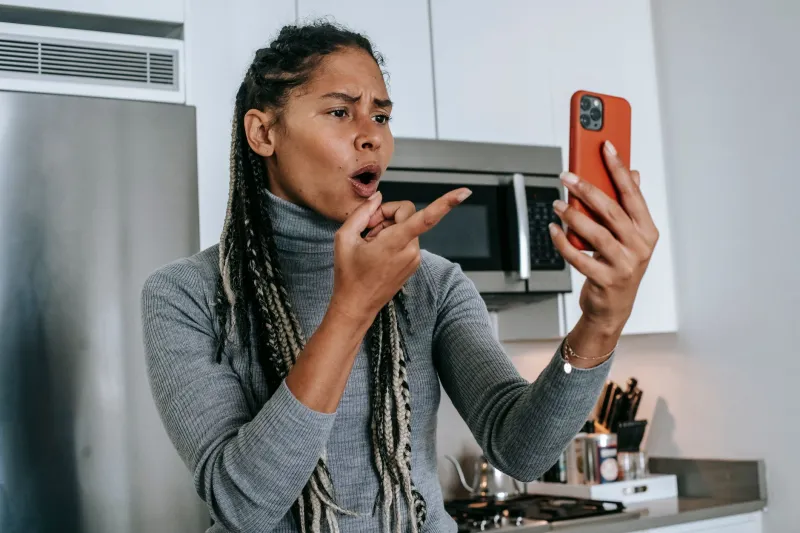
Photo by Photo by Elsa Tonkinwise on Unsplash on Unsplash
Not long ago, releasing an album meant releasing an album — a cohesive, sequenced body of work that you put out into the world and let breathe. A painting was finished when the artist said it was finished. A short story had a beginning, a middle, and an end, usually in that order.
That logic still exists. It's just no longer the only logic.
A growing number of younger creators are making a deliberate, strategic choice to fragment their work — releasing pieces across different platforms, in different formats, at different times — not because they can't finish something, but because incompleteness has become its own kind of statement. The slice is the point. The fragment is the art.
And it's worth asking: is this a genuinely new creative language, or are we watching the death of the complete artistic statement in slow motion?
The Algorithm Didn't Create This — But It Definitely Helped
Let's be honest about context. The fragmented release strategy didn't emerge from a vacuum. It emerged from a media environment where a three-minute song gets skipped in 14 seconds, where a painting posted in full gets less engagement than a dramatic close-up of one corner, where a serialized story on TikTok can rack up millions of views that a finished novella will never see.
Creators noticed. They adapted. But somewhere along the way, a subset of them stopped just adapting and started choosing.
There's a difference between releasing a 45-second clip because TikTok won't show you anything longer and releasing a 45-second clip because you've decided that 45 seconds is the exact duration the idea needs to land. The first is compromise. The second is a creative decision. And more and more, younger artists are operating from that second place.
Producer and beatmaker Juno Vásquez, 23, who's been building a following on both SoundCloud and Instagram Reels out of Chicago, describes it this way: "I don't think of my tracks as incomplete. I think of them as specific. Each one is designed for exactly where it lives. The TikTok version isn't a preview of something longer — it is the thing."
Micro-Moments Across Every Medium
This approach is showing up across creative disciplines in ways that are genuinely interesting to watch.
In music, artists are releasing what they're calling "fragment EPs" — not traditional albums, not singles, but loose collections of 60-to-90-second pieces that together suggest a mood or narrative without spelling it out. Some are releasing stems and loops rather than finished songs, inviting listeners to participate in the completion.
In visual art, painters and illustrators are posting works-in-progress as the primary content — not teasing a final reveal, but treating the process itself as the piece. The finished version, when it comes, is almost anticlimactic. The journey was the gallery.
Storytelling might be where this gets most interesting. Creators on platforms like TikTok and Wattpad are releasing stories in chunks of 200 to 400 words, sometimes with deliberately open endings that shift based on audience response. It's serialized fiction, but it's also something more reactive — a story that changes shape based on who's reading it and when.
Illustrator and visual essayist Priya Okonkwo, who splits her time between Atlanta and the internet, puts it bluntly: "The people who are frustrated by this are usually people who grew up with a specific idea of what art is supposed to look like when it's done. But done is a construct. I'm interested in what the work does right now, not what it becomes eventually."
The Integrity Question Nobody Wants to Answer
Here's where it gets complicated.
There's a real tension between the strategic intelligence of fragmented releasing and the question of artistic integrity. Not in a snobbish, gatekeeping way — but in a genuine, worth-examining way.
When you design work specifically for a platform's algorithm, you're making formal decisions based on distribution logic rather than creative instinct. That's not inherently bad — artists have always worked within constraints, and constraints can generate brilliant solutions. The sonnet is a constraint. The three-minute pop song is a constraint. Platform-native micro-content is a constraint.
But there's a version of this that's less about creative freedom and more about chasing reach. And when the primary question shaping a work is "what will perform," something shifts. Not everything made under that pressure is compromised — but some of it is, and it can be hard to tell from the outside.
The creators doing this most interestingly are the ones who can articulate why a fragment is the right form for a specific idea — not just that it performs better, but that it captures something a longer work couldn't. That distinction matters.
What Gets Lost, and What Might Be Gained
Long-form work does things that micro-content can't. A full album creates an emotional arc. A complete short story earns its ending. A painting that you can sit with for an hour gives you something different than one you scroll past in three seconds, even if the three-second version made you feel something real.
There's a patience that longer work demands from both the creator and the audience, and that patience can produce a kind of depth that fragmented work often can't reach.
But fragmented work does things long-form can't, either. It meets people where they are. It invites participation. It creates a sense of unfolding that a finished object can't replicate. It makes space for the audience to bring something to the work, to imagine the parts that aren't there.
Maybe the honest answer is that we're not watching one form replace another. We're watching a genuine expansion of what art can look like and how it can move through the world. The complete artistic statement isn't dying — it's just no longer the only valid form a creative idea can take.
The creators who understand this — who can move fluidly between the fragment and the whole, choosing the form that serves the idea rather than defaulting to either — are probably the ones to watch.
The slice can be the point. And sometimes the whole picture still matters.
Both things are true. The interesting question is which one is true for your work.