The Power of No: Why Turning Down Collabs Might Be the Best Creative Decision You Ever Make

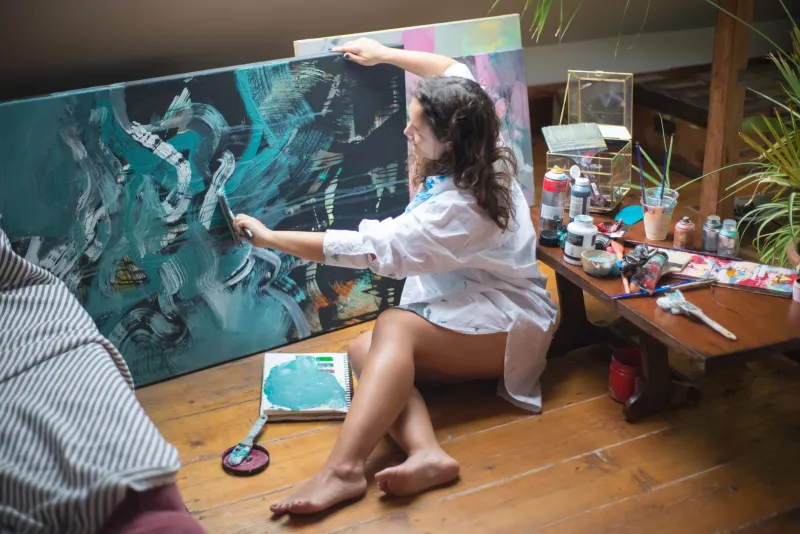
Photo by Photo by Theo Bickel on Unsplash on Unsplash
Everybody wants to collaborate these days. Open your DMs on any given Tuesday and you'll probably find a handful of people pitching joint projects, co-releases, or "creative synergies" that sound exciting for about thirty seconds before the doubt creeps in. The culture around creative work — especially in music and visual art — has romanticized collaboration so thoroughly that saying no to it can feel almost antisocial. Like you're the difficult one. Like you're leaving opportunity on the table.
But here's the thing nobody really talks about: some of the most singular, lasting creative work in recent memory came from artists who were almost aggressively selective about who they let into their process.
When "Yes" Becomes the Default
There's a version of collaboration that genuinely works. Two people bring different strengths, challenge each other's assumptions, and make something neither could have made alone. That's the dream, and it does happen. But there's another version — the one that gets talked about less — where the collaboration becomes a negotiation that never ends. Where every creative decision turns into a compromise. Where the final product is technically a shared effort but emotionally belongs to nobody.
The pressure to collab comes from a few directions at once. Algorithms reward it. Audiences respond to it. And honestly, the creative life can be lonely enough that the idea of building something with another person sounds genuinely appealing. None of that is wrong. But when "yes" becomes your default response to every incoming offer, you stop making decisions based on your work and start making them based on social anxiety.
Saying no isn't about being precious. It's about understanding what your work actually needs.
The Vision Dilution Problem
Here's a question worth sitting with: when you imagine your best work — the stuff you'd make if nothing external was pulling at you — does it look like a committee decision?
Probably not. Most artists, when they're being honest, have a pretty clear internal compass. They know what they're drawn to, what they're trying to say, what the work is for. The problem is that compass is surprisingly easy to knock off course when you bring in a collaborator whose vision doesn't actually align with yours.
This isn't about talent. You can work with someone incredibly skilled and still end up with something that feels like a compromise rather than a creation. The issue is alignment — not just in aesthetic taste, but in values, in intent, in what you both think the work is trying to do in the world.
Think about how Jack White has operated for most of his career. Whether in The White Stripes, The Raconteurs, or solo, he's been famously intentional about who he makes music with and how that music gets made. The restrictions he places on his process — no laptops on stage, analog recording methods, specific creative constraints — aren't just quirks. They're a way of protecting the thing that makes his work his. That kind of selectivity requires saying no constantly, and the output has stayed remarkably coherent over decades.
How to Actually Tell the Difference
So how do you know when a potential collaboration is worth pursuing versus when it's just flattering noise? A few honest questions can help cut through it.
Does this person understand what you're already making? Not just in a "I've seen your stuff, it's cool" way, but do they actually get what you're going for? Can they articulate it back to you in a way that feels accurate? If someone wants to work with you but their pitch reveals they haven't really engaged with your existing work, that's a signal.
Is the collaboration filling a genuine gap, or just adding more? The best creative partnerships happen when one person genuinely has something the other doesn't — a different skill set, a different emotional angle, a different technical ability. If a collaboration is mostly just doubling what you already do, the result is usually noise rather than depth.
Are you excited about the work, or just the idea of the work? There's a difference between being genuinely fired up about what you'd make together and being swept up in the social energy of a new connection. Both feel good in the moment, but only one of them produces something meaningful six months later.
Would you be comfortable walking away if it wasn't working? If the answer is no — if the relationship feels too complicated to exit cleanly — that's worth noting before you start.
Intentional Exclusivity Isn't Elitism
One thing that holds a lot of creators back from being selective is the fear of coming across as arrogant. Like turning down a collaboration means you think you're better than the person offering it. But that's not really what's happening when you say no thoughtfully.
Being intentional about your collaborators is actually a form of respect — for your own work and for theirs. Entering a creative partnership half-heartedly, just because it seemed rude to decline, doesn't serve either of you. The person you're working with deserves a collaborator who's genuinely all in. And your work deserves the same.
Some of the most creatively alive artists working today — in music, in visual art, in storytelling — operate with relatively small, tight creative circles. Not because they're closed off, but because they've learned through experience that depth beats breadth when it comes to creative partnership. They've found the people who get it, and they keep going back to those people.
The Work Comes First
At the end of the day, the only real question is what serves the work. Not what looks good on a press release, not what racks up the most engagement when you announce it, not what makes the most people feel included. What actually makes the work better?
Sometimes the answer is a collaboration. Sometimes it's solitude. Sometimes it's a very specific person who challenges you in exactly the right way. But you can only find that answer if you're asking the question honestly — and if you're willing to say no when the answer isn't yes.
Your creative vision is the one thing that's entirely yours. Protect it like it matters. Because it does.