Two Voices, One Vision: What Happens When You Let Someone Else Into Your Creative Process
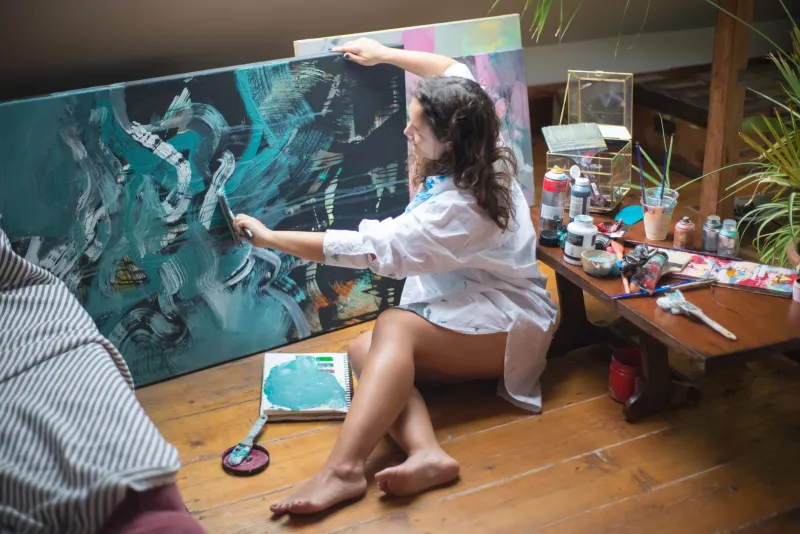
There's this story we tell ourselves about creativity. The struggling painter, alone in a loft. The songwriter at 2 a.m., hunched over a guitar. The writer disappearing into a cabin for three months. We romanticize solitude like it's a prerequisite for making anything real.
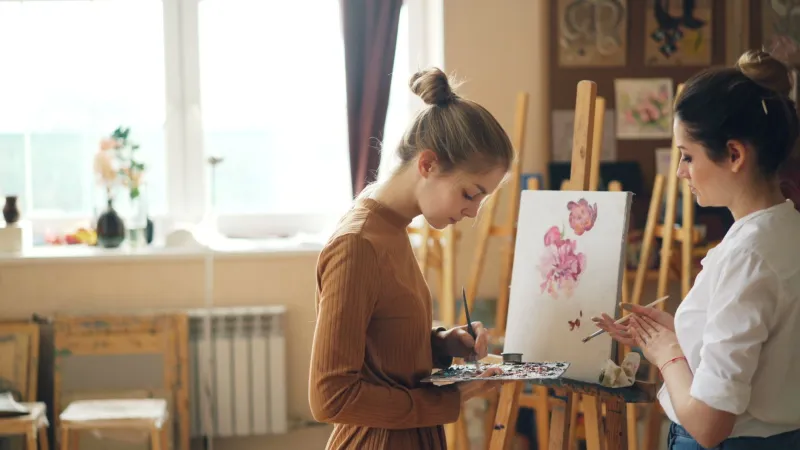
But here's the thing — some of the most genuinely moving work being made right now is coming out of unexpected partnerships. And the artists behind it will tell you the same thing: letting go of sole ownership was the scariest and most transformative decision they ever made.
The Ego Problem Nobody Talks About
Creative ego isn't inherently bad. It's what gets you to finish things. It's what makes you defend your choices when someone suggests you water them down. But that same protective instinct can become a ceiling.
When you've been making work on your own for years, your process hardens into habit. You start solving problems the same way every time, not because it's always the best solution, but because it's your solution. Psychologists call this functional fixedness — the tendency to see tools and approaches only in the ways you've used them before.
Collaboration cracks that open. Someone else doesn't know your rules, so they don't follow them. And sometimes that's exactly what a piece of work needs.
What "Complementary Skills" Actually Looks Like in Practice
We throw around the phrase "complementary skills" like it's obvious what it means, but in creative work it gets interesting fast.
Take the long-running creative partnership between visual artists and musicians in the American experimental scene. Think about what happened when Beyoncé brought visual artist Kahlil Joseph into the Lemonade project. Joseph's background in short film and documentary gave the album's visual component a texture and emotional grammar that a traditional music video director might never have reached for. Neither person could have made that alone — not because they lacked talent, but because neither had the full vocabulary the project required.
Or look at the collaboration between illustrators and fiction writers in the graphic novel world. When writer Ta-Nehisi Coates partnered with artist Brian Stelfreeze on Black Panther, Coates described the experience as learning an entirely new language. Stelfreeze's visual instincts pushed the narrative in directions Coates's prose brain hadn't considered. The result was richer for the tension between their two creative sensibilities.
The magic isn't in finding someone who thinks exactly like you. It's in finding someone whose gaps match your strengths, and whose strengths expose your gaps.
Sharing Control Without Losing Your Voice
This is the real fear, isn't it? That if you let someone else in, the work stops being yours. That your voice gets diluted, your vision compromised, your name attached to something that doesn't fully represent you.
It's a valid concern. Bad collaborations absolutely do produce that result. But good ones do something different — they reveal parts of your voice you didn't know were there.
The key is being intentional about what you're protecting and what you're willing to interrogate. Before you start any collaborative project, it helps to get clear on your non-negotiables. What is the emotional core of this piece? What would make it feel false? Those anchors keep you grounded when the creative conversation gets messy.
Everything else — structure, format, medium, execution — can be up for conversation. And that openness is where the unexpected stuff happens.
Cross-Disciplinary Work Is Having a Moment (For Good Reason)
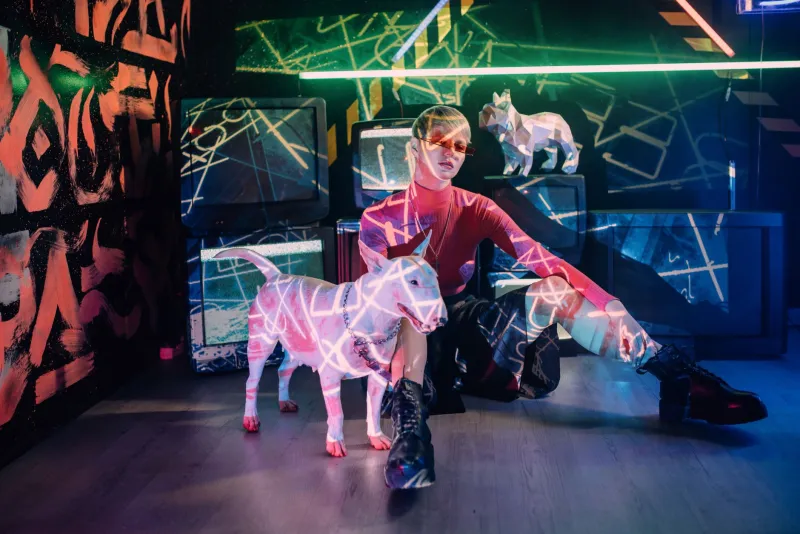
Across the US creative landscape right now, the most interesting projects are refusing to stay in their lanes. Musicians are co-creating installations with architects. Poets are collaborating with data visualizers. Choreographers are working with sound designers from the tech world.
This isn't just trend-chasing. It reflects something real about how audiences are experiencing art in 2024. People don't just listen or just look — they want to be inside something, to feel it from multiple angles at once. Cross-disciplinary collaboration is often the only way to build that kind of immersive experience, because no single person has all the tools.
The Brooklyn-based collective Grizzly Bear spent years incorporating visual artists, filmmakers, and fashion designers into their creative process, treating each album release as a total aesthetic event rather than just a music drop. The result wasn't a diluted version of their sound — it was an amplified version of their world.
A Practical Note for Anyone Considering It
If you're thinking about opening your process to a collaborator for the first time, start smaller than you think you need to. Don't bring someone into your most precious, central project right away. Find something you care about but can afford to experiment with.
Have the awkward conversation early about credit, ownership, and decision-making. Nothing tanks a creative partnership faster than ambiguity around whose name goes on it and who gets final say.
And then — this is the hard part — actually listen. Not to be polite. Not to seem open. But because the whole point is that your collaborator is seeing something you can't see from where you're standing.
The solitary genius myth is seductive. But the work that tends to move people most? It usually has more than one heartbeat in it.