Resting Without Rotting: Why Taking a Break Doesn't Mean Giving Up on Your Art
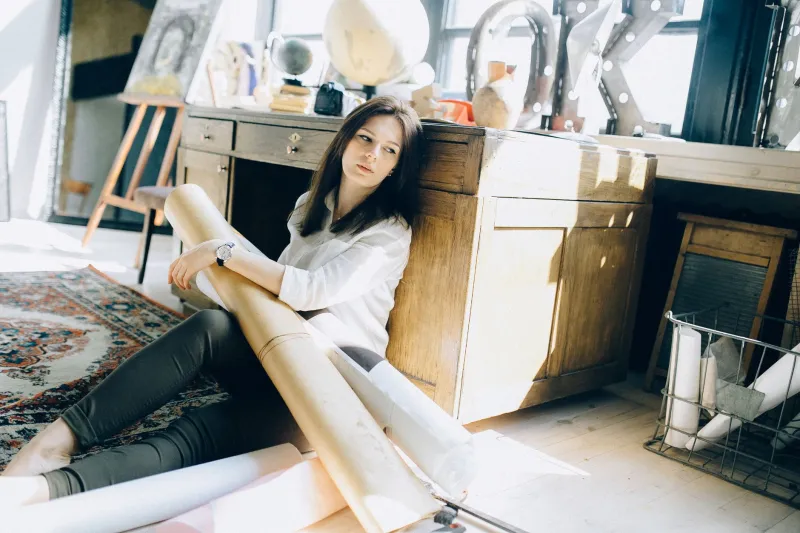
Somewhere between your third consecutive 14-hour day in the studio and the moment you finally close your laptop and stare at the ceiling, a thought creeps in. Am I being lazy? You haven't posted in four days. Your inbox has two unanswered collaboration requests. There's a half-finished track sitting in your DAW like a quiet accusation. And instead of doing any of it, you're lying on the couch watching old episodes of The Bear.
Welcome to the guilt of taking a break — one of the most universal, least-talked-about experiences in the creative world.
Why Rest Feels Like a Dirty Word
For most creators, especially those who've built even a small audience, stepping away from the work doesn't feel neutral. It feels like a betrayal. Of your audience. Of your momentum. Of some imaginary version of yourself who never gets tired and always has something brilliant to say.
This isn't just an individual quirk — it's baked into the culture around creative work in America. We celebrate the grind. We share the all-nighters. We post the "made this at 2am" caption and watch the engagement roll in. Hustle gets romanticized in a way that makes rest look like weakness, or worse, like you don't actually care enough.
But here's the thing: that story is costing creators their best work, their mental health, and in a lot of cases, their passion for the thing they loved most.
The Psychology Behind Creative Burnout
Burnout isn't just being tired. It's a specific kind of depletion that happens when you've been running on fumes for so long that the tank doesn't just feel empty — it feels like it might be permanently smaller than it used to be.
Researchers who study creative burnout describe it as a collapse in what they call intrinsic motivation — the internal drive to make something because it genuinely moves you. When that erodes, you're left making work from obligation, from fear of being forgotten, from the anxiety of watching someone else take your spot in the algorithm. That kind of creative output is almost never your best. It's reactive, thin, and hollow in ways your audience can usually sense even if they can't name it.
The cruel irony is that pushing through often makes the burnout worse. You keep producing, but the work suffers. The work suffering makes you feel like a fraud. Feeling like a fraud makes you work harder to prove yourself. And around and around it goes until something — your body, your relationships, or your love of the craft — finally forces a stop.
Strategic Rest vs. Creative Death
Here's a distinction that matters more than most people talk about: there's a real difference between strategic rest and what creators fear when they think about stepping back, which is something closer to creative death.
Creative death is the fear that if you stop, you'll lose the thread entirely. That the ideas will dry up, the audience will evaporate, and you'll come back to find yourself starting from zero with none of the energy that got you here in the first place.
Strategic rest is something else entirely. It's intentional. It has a loose shape to it — maybe it's a week where you don't open your recording software, or a month where you let yourself consume art instead of making it. You're not abandoning the work. You're feeding the part of yourself that the work comes from.
The best creators — and this holds across music, visual art, writing, film — tend to treat their downtime with the same seriousness they bring to a project deadline. It's not a collapse. It's a scheduled refill.
What Prolific Creators Actually Do
If you look closely at the most consistently generative artists and musicians, you'll notice something interesting: they're rarely the ones who never stop. They're the ones who've figured out how to stop well.
Think about the musicians who release a record, tour behind it, and then go radio silent for a year or two. The ones who come back with something that genuinely surprises you. That silence wasn't laziness. It was listening. It was living a life full enough to have something worth saying again.
Or consider visual artists who talk about taking walks, going to museums, watching movies, cooking elaborate meals — activities that have nothing to do with their medium but everything to do with refilling the creative reservoir. They're not avoiding work. They're doing the invisible work that makes the visible work possible.
The creators who seem to produce endlessly without burning out usually have a few things in common: they batch their output strategically, they protect certain hours or days as off-limits to the hustle, and they've made peace with the idea that being a person — a full, curious, rested person — is part of the job description.
The Audience Will Wait (And the Right Ones Will)
One of the biggest fears underneath all of this is the audience. What if they forget about me? What if they move on?
Honestly? Some of them might. But here's the part that's worth sitting with: the audience that disappears the moment you go quiet for a few weeks was never really invested in you. They were invested in the content stream. And content streams are replaceable.
The people who actually connect with your work — who share it with friends, who come back to it on hard days, who feel like you're somehow speaking directly to something they carry around — those people don't evaporate because you took a month off. They wait. And when you come back with something that actually has weight to it, something made from a full tank instead of an empty one, they feel it.
Your most loyal audience isn't rooting for your output. They're rooting for you.
Giving Yourself Permission
None of this is easy to internalize, especially if you've spent years tying your self-worth to your productivity. The guilt doesn't just switch off because you've read a convincing argument. It lingers. It shows up on day three of your break when you pick up your phone and start doom-scrolling through what everyone else is making.
But maybe start small. Take one afternoon completely off — no sketching, no voice memos, no "just checking" the stats. See what happens to your brain when you give it room. Notice if you feel slightly more like yourself by the end of it.
Rest isn't a betrayal of your art. It's one of the most honest things you can do for it. The work you make from a full, rested place will almost always be better than anything you grind out from the bottom of the barrel.
Your creativity isn't going anywhere. Give it somewhere worth coming back to.